Uppsala
City guide · Uppland · Sweden
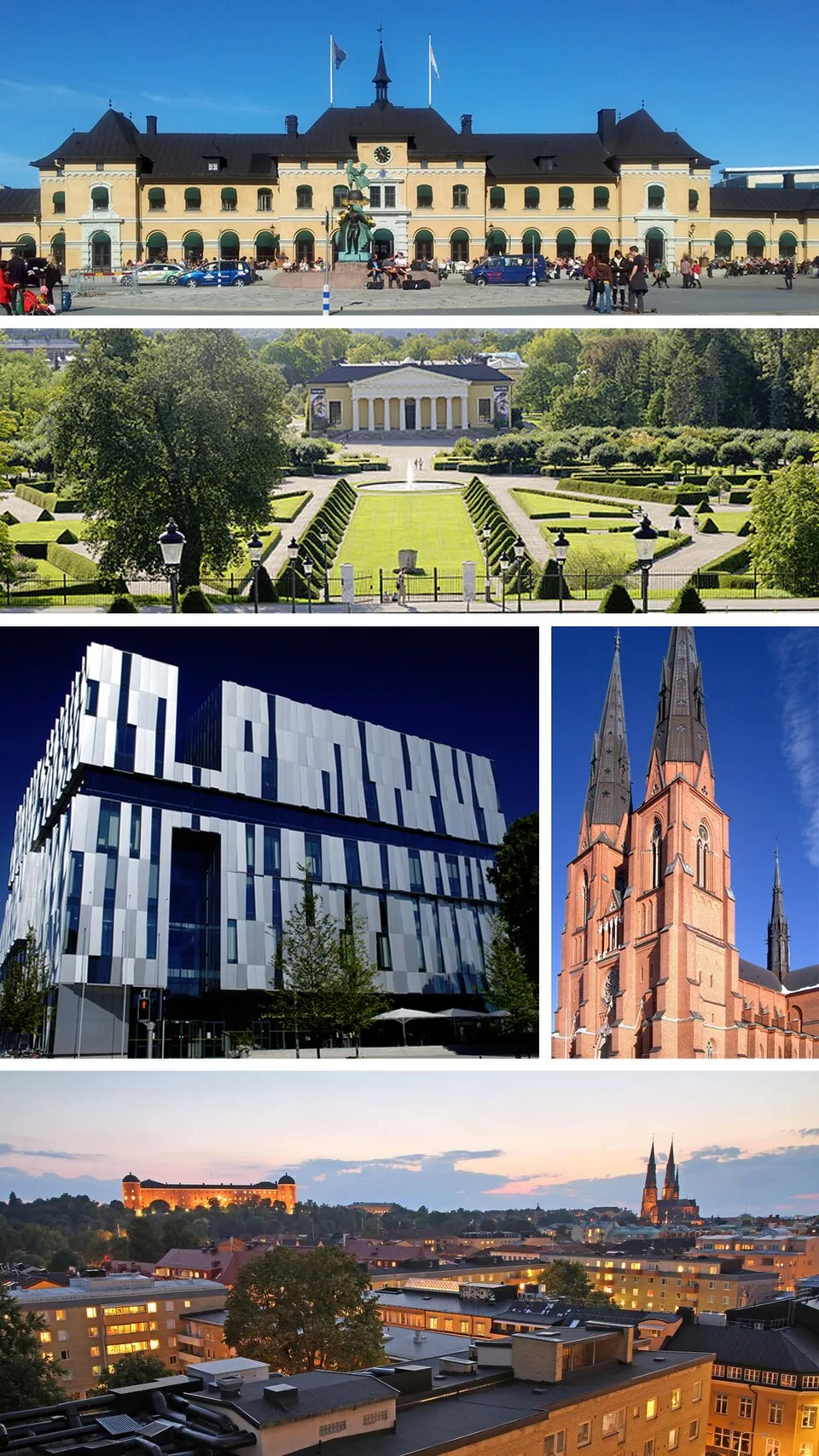
Uppsala Cathedral, Scandinavia's largest cathedral, inaugurated in 1435 · Uppsala Castle, built by King Gustav Vasa, serving as residence of the Governor of Uppsala County
About Uppsala
Uppsala is a university city in Sweden, the capital of Uppsala County, and the country's fourth-largest city. Located 71 km (44 mi) north of Stockholm, it has been the ecclesiastical centre of Sweden since 1164 as the seat of the Archbishop of the Church of Sweden. It is home to Scandinavia's largest cathedral, Uppsala Cathedral, and Uppsala University, founded in 1477, the oldest centre of higher education in Scandinavia. The city features the small Fyris River (Fyrisån) flowing through fertile flatlands, with the glacial ridge of Uppsalaåsen running parallel, site of Uppsala Castle. The commercial centre is compact, with a distinct town-and-gown divide historically separating clergy, royalty, and academia in the Fjärdingen neighbourhood on the river's western shore.
Who this destination fits
Highlights worth planning around
Strong fit
- Home to Scandinavia's largest cathedral, Uppsala Cathedral, a Gothic structure with towers reaching 118.70 metres (389.4 ft)
- Uppsala University, founded in 1477, is the oldest centre of higher education in Scandinavia
- Located only 71 km (44 mi) north of Stockholm, with a train to Stockholm-Arlanda Airport taking 17 minutes
- Compact commercial centre with pedestrianized streets and a main square on the eastern side of the river
- Rich heritage including Uppsala Castle, built by King Gustav Vasa, and the 16th-century castle site
- Distinct town-and-gown character with the ensemble of cathedral, castle, and university buildings mostly undisturbed
Tradeoffs
- Cold winters with a January daily mean of −2.7 °C (27.1 °F), though milder than other cities at similar latitudes due to the Gulf Stream
- Northerly location means under 6 hours of sunshine during the winter solstice
- Frequent rain, as the city contains multiple lakes and tends to receive large amounts of rain very often
- Some historic buildings were lost to demolitions during the 1960s and 1970s, particularly in the eastern central core
- Retail commercial activity has partly shifted to shopping malls and stores in the outskirts, away from the historic centre
Plan the trip
Best time to visit
Summer months offer over 18 hours of visible sunshine during the summer solstice, with warm summers characteristic of the humid continental climate
Planning lead time
Minimal for a day trip from Stockholm; more time recommended for exploring university heritage and surrounding nature
Decision factors
Getting around
Located 71 km (44 mi) north of Stockholm, approximately 40 minutes by train; train to Stockholm-Arlanda Airport takes 17 minutes
Trip Budget Calculator for Uppsala
Estimate your travel expenses based on duration, style & group size
Global planning baseline. Flights use a generic estimate.
* Commission may be earned from qualifying partner bookings.