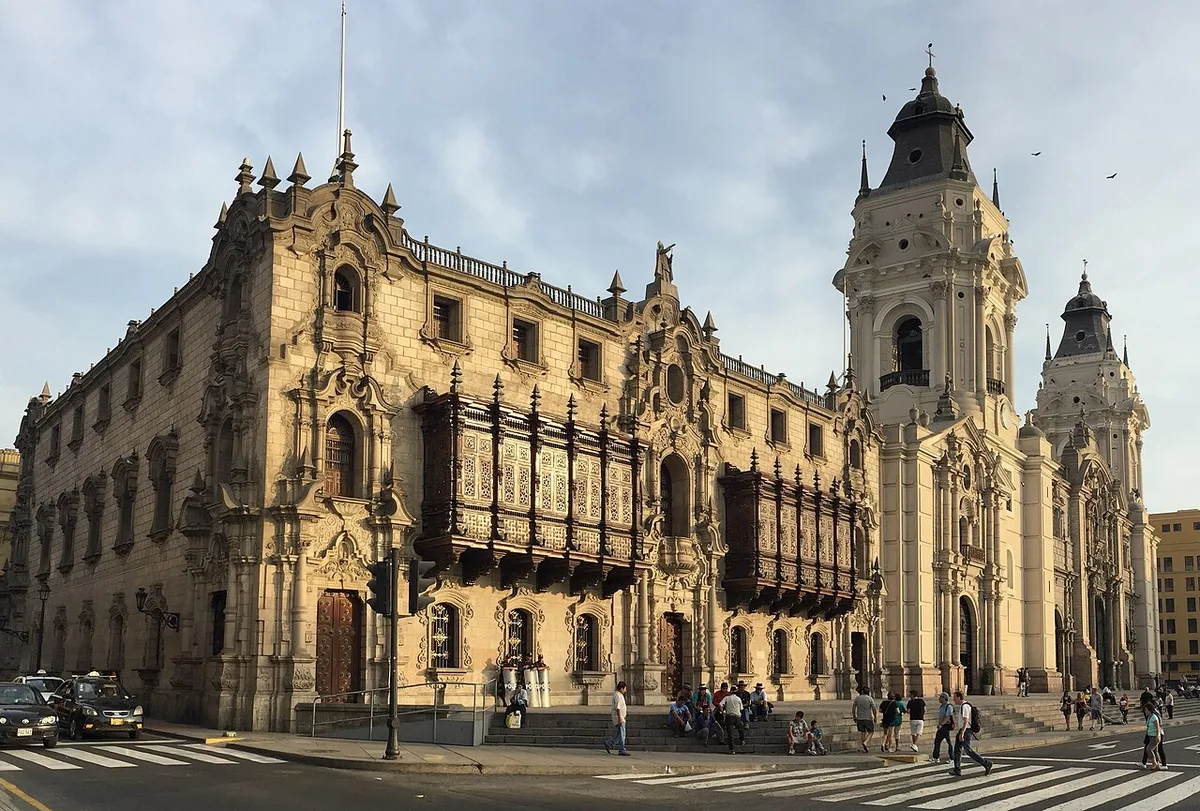
Lima
City guide · Central coastal Peru, overlooking the Pacific Ocean · Peru
Historic Center of Lima · Miraflores skyline and coastal districts
About Lima
Lima is the capital and largest city of Peru, located in the valleys of the Chillón, Rímac, and Lurín rivers in the desert zone of the central coastal part of the country, overlooking the Pacific Ocean. It is considered the political, cultural, financial, and commercial center of Peru. The metropolis extends mainly within the province of Lima and, to the west, within the Constitutional Province of Callao, where the seaport and Jorge Chávez Airport are located. The city was founded in 1535 under the name 'City of Kings' (Ciudad de los Reyes) by Francisco Pizarro. The Historic Center of Lima is a UNESCO World Heritage Site, designated in 1988 and 1991. Lima is nicknamed 'Ciudad de los Reyes' (City of the Kings), 'La Tres Veces Coronada Villa' (The Three Times Crowned Ville), and 'La Perla del Pacífico' (The Pearl of the Pacific).
Who this destination fits
Highlights worth planning around
Strong fit
- Lima is the political, cultural, financial, and commercial center of Peru, offering a wide range of urban experiences.
- The Historic Center of Lima is a UNESCO World Heritage Site, designated in 1988 and 1991, with significant colonial architecture.
- The city is located on the Pacific coast, providing seaside districts like Miraflores and San Isidro.
- Lima has hosted major international events, including the 2019 Pan American Games and APEC meetings in 2008, 2016, and 2024.
- As a primate city, Lima concentrates a significant portion of Peru's population and resources, making it a hub for regional diplomacy and trade as headquarters of the Andean Community.
Tradeoffs
- Lima is a large metropolis with a population of over 9.6 million (city proper, 2025), which can lead to congestion and a fast-paced environment.
- The city is located in a desert zone, which may not appeal to travelers seeking lush natural landscapes within the city itself.
- The metropolitan area extends into the Constitutional Province of Callao, where the seaport and airport are located, which can add complexity to navigation.
- As a primate city, Lima dominates the national urban hierarchy, which may mean less variety in terms of alternative urban centers nearby.
- The city's elevation ranges from 0 to 1,550 meters, which may be a consideration for travelers sensitive to altitude changes, though the city center is at sea level.
Decision factors
Getting around
The metropolis extends mainly within the province of Lima and, to the west, within the Constitutional Province of Callao, where the seaport and Jorge Chávez Airport are located.
Trip Budget Calculator for Lima
Estimate your travel expenses based on duration, style & group size
Global planning baseline. Flights use a generic estimate.
* Commission may be earned from qualifying partner bookings.