Bergen
City guide · Vestland · Norway
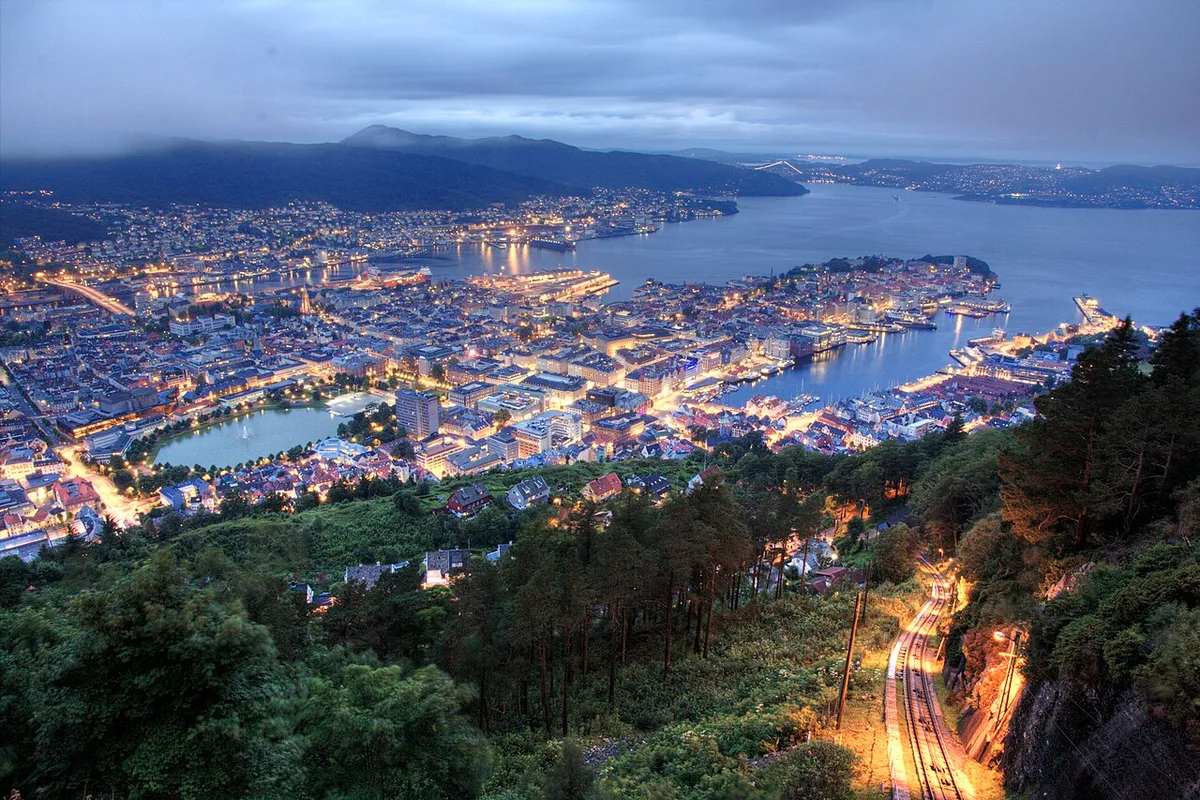
Bryggen, the old quayside that was the center of Hanseatic trade, is a UNESCO World Heritage Site · Bergenhus fortress, dating from the 1240s, guards the entrance to the harbour
About Bergen
Bergen is a city and municipality in Vestland county on the west coast of Norway, and the country's second-largest city after Oslo. It is surrounded by mountains, which has led to its nickname as the 'city of seven mountains'. The city centre and northern neighbourhoods sit on Byfjorden, 'the city fjord'. Bergen is the administrative centre of Vestland county and consists of eight boroughs: Arna, Bergenhus, Fana, Fyllingsdalen, Laksevåg, Ytrebygda, Årstad, and Åsane. The municipality covers 465 square kilometres and is on the peninsula of Bergenshalvøyen. Bergen is an international centre for aquaculture, shipping, the offshore petroleum industry, and subsea technology, and a national centre for higher education, media, tourism, and finance. The city has a mild winter climate with significant precipitation, experiencing around 200 days a year with over a millimetre of precipitation.
Who this destination fits
Highlights worth planning around
Strong fit
- Bergen is the second-largest city in Norway and serves as a major hub for tourism, higher education, media, and finance
- The city is an international centre for aquaculture, shipping, offshore petroleum, and subsea technology
- Bergen Port is Norway's busiest in terms of both freight and passengers, with over 300 cruise ship calls a year bringing nearly half a million passengers
- The city features Bergen Airport, Flesland, Bergen Light Rail, and is the terminus of the Bergen Line
- Bergen has a mild winter climate due to the Gulf Stream, with the sea kept relatively warm considering the latitude
- The city is surrounded by mountains that protect it from cold winds from the north, north-east, and east
Tradeoffs
- Bergen experiences significant precipitation, with on average around 200 days a year with over a millimetre of precipitation
- In summer, Bergen is several degrees cooler than Oslo due to maritime effects
- The city has been hit by numerous fires over the years, a risk that shaped its development
- Bergen was Norway's largest city until the 1830s but was later overtaken by Oslo, making it a secondary city in national terms
Plan the trip
Best time to visit
Summer months when temperatures are warmer, though still cooler than Oslo due to maritime effects
Planning lead time
Moderate planning recommended to account for frequent precipitation and to arrange fjord excursions
Decision factors
Safety
No specific safety concerns are documented in the source evidence.
Getting around
Bergen features Bergen Airport, Flesland, Bergen Light Rail, and is the terminus of the Bergen Line. Four large bridges connect Bergen to its suburban municipalities.
Trip Budget Calculator for Bergen
Estimate your travel expenses based on duration, style & group size
Global planning baseline. Flights use a generic estimate.
* Commission may be earned from qualifying partner bookings.