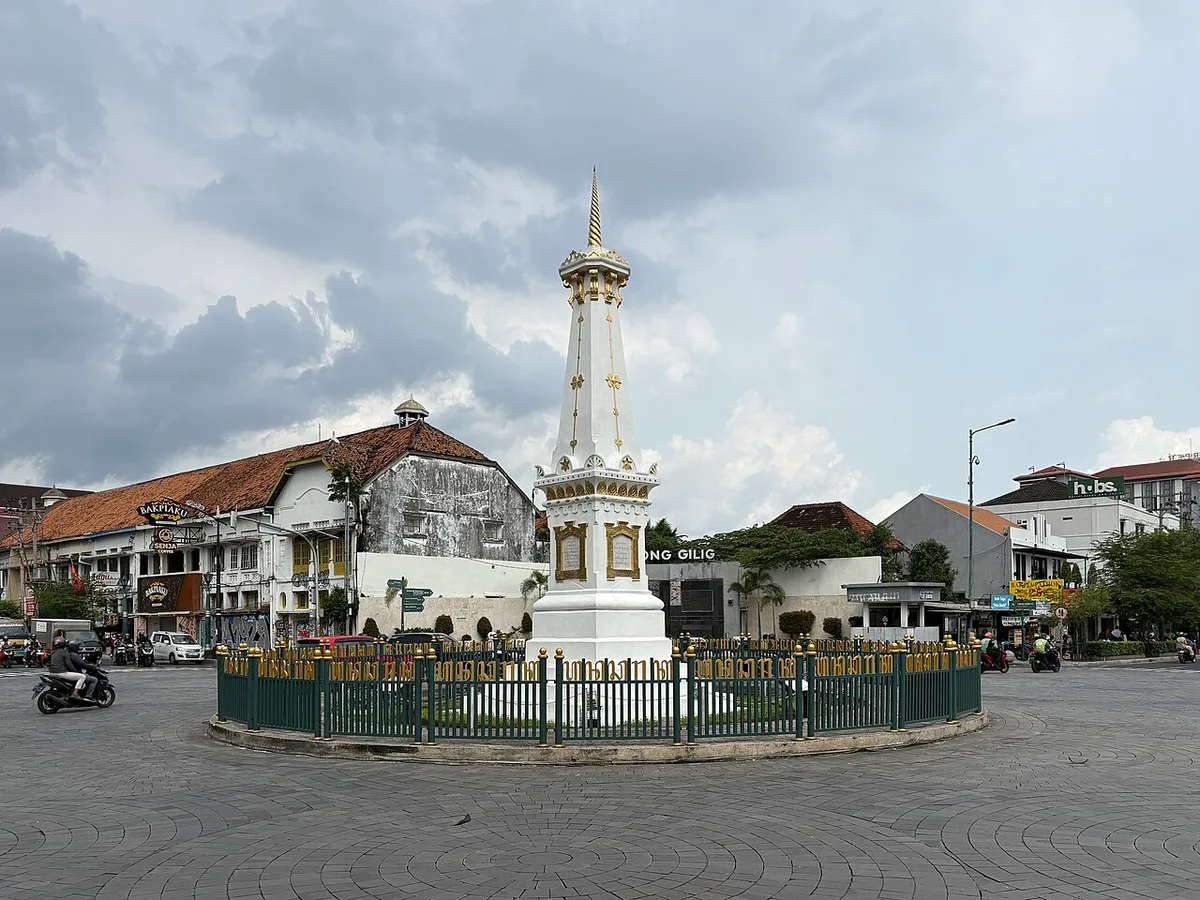
Yogyakarta
City guide · Special Region of Yogyakarta, Java · Indonesia
Kraton Ngayogyakarta Hadiningrat · Taman Sari Water Castle
About Yogyakarta
Yogyakarta is the capital city of the Special Region of Yogyakarta in south-central Java, Indonesia. It is the only Indonesian royal city still ruled by a monarchy and is regarded as an important centre for classical Javanese fine arts and culture, including ballet, batik textiles, drama, literature, music, poetry, silversmithing, visual arts, and wayang puppetry. The city is also renowned as a centre of Indonesian education, home to a large student population and dozens of schools and universities, including Gadjah Mada University, the country's largest institute of higher education and one of its most prestigious. Yogyakarta served as the Indonesian capital from 1946 to 1948 during the Indonesian National Revolution, with Gedung Agung as the president's office. The Cosmological Axis of Yogyakarta and its Historic Landmarks was inscribed as a UNESCO World Heritage Site in 2023.
Who this destination fits
Highlights worth planning around
Strong fit
- Rich cultural heritage as the only Indonesian royal city still ruled by a monarchy, with classical Javanese arts like ballet, batik, drama, music, poetry, silversmithing, and wayang puppetry
- Strong educational reputation as a centre of Indonesian education, home to Gadjah Mada University, the country's largest and most prestigious institute of higher education
- significance as the Indonesian capital from 1946 to 1948 during the Indonesian National Revolution
- UNESCO World Heritage recognition for the Cosmological Axis of Yogyakarta and its Historic Landmarks, inscribed in 2023
- High human development with an HDI of 0.887, the highest among all Indonesian regencies and cities
Tradeoffs
- City area is relatively small at 32.82 km², which may limit space for large-scale urban exploration
- Population density is high at approximately 11,450/km², which could lead to crowded conditions in popular areas
- As a major cultural and educational hub, it may feel busy or tourist-oriented in central districts like Malioboro
- Limited direct international connectivity compared to larger Indonesian hubs like Jakarta or Bali, requiring additional travel planning
- Tropical climate with potential for heavy rainfall during the wet season, which may affect outdoor activities
Trip Budget Calculator for Yogyakarta
Estimate your travel expenses based on duration, style & group size
Global planning baseline. Flights use a generic estimate.
* Commission may be earned from qualifying partner bookings.