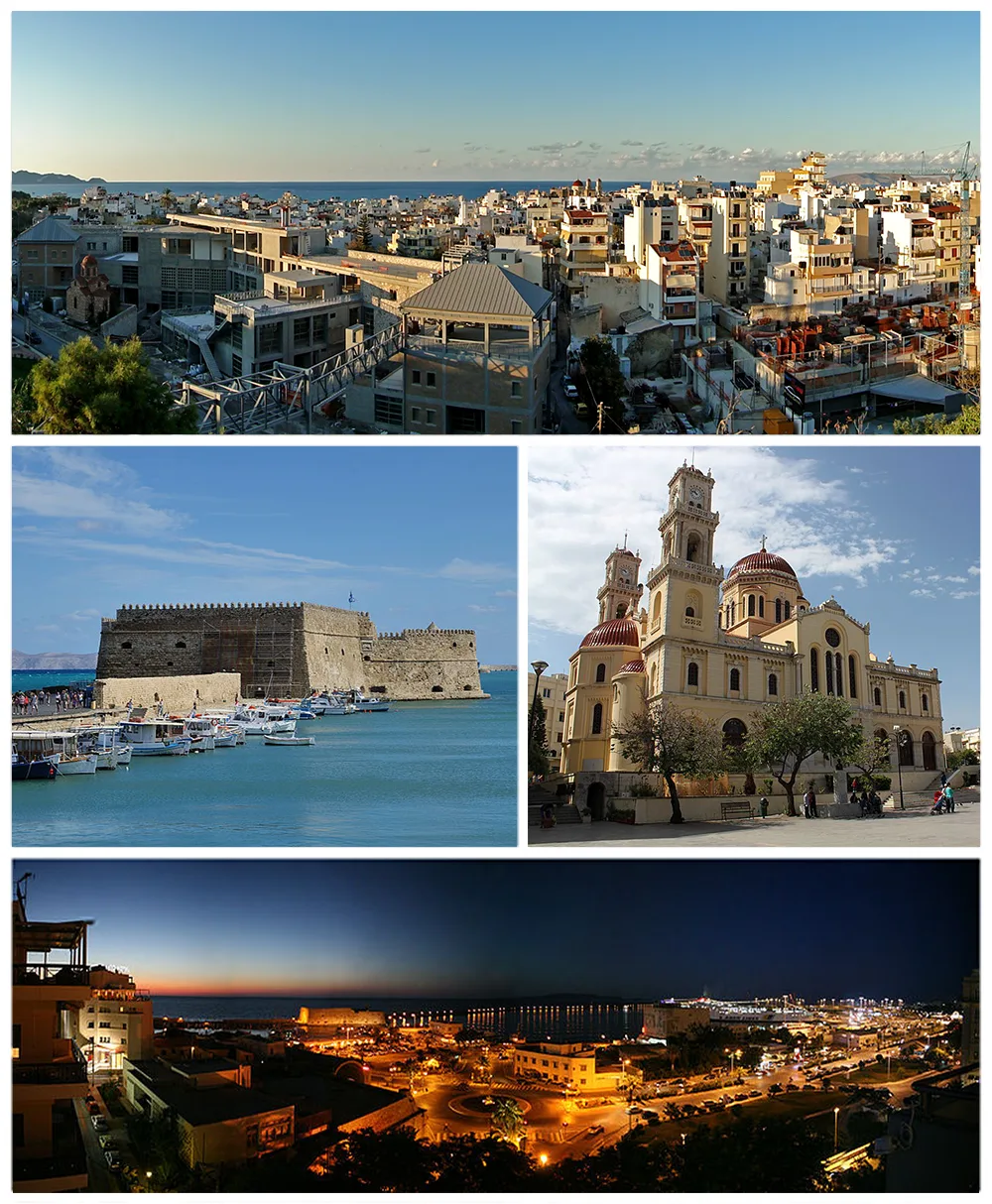
Heraklion
City guide · Crete · Greece
Palace of Knossos · Heraklion Archaeological Museum
About Heraklion
Heraklion is the capital of Crete and the island's primary gateway, blending ancient history with a lively modern port city. Travelers typically use it as a base to explore the Minoan Palace of Knossos and the Heraklion Archaeological Museum, which houses many of the site's most significant finds. The city itself offers a mix of Venetian and Ottoman architecture, bustling markets, and a vibrant waterfront. It is best suited for history enthusiasts and first-time visitors to Crete who want convenient access to the island's most famous ancient sites, though those seeking a more intimate or tranquil Greek island experience may find it busy and less picturesque than smaller towns.
Who this destination fits
Highlights worth planning around
Strong fit
- Serves as the main transport hub for Crete, with an international airport and major ferry connections, making it a convenient arrival point.
- Provides direct access to the Palace of Knossos, one of the most important archaeological sites in Greece and a key Minoan landmark.
- The Heraklion Archaeological Museum holds a world-renowned collection of Minoan artifacts, offering deep historical context for the region.
- Offers a wide range of accommodation, dining, and shopping options due to its status as the island's largest city.
- Good public transport links to other parts of Crete, facilitating day trips and further exploration.
Tradeoffs
- As a large, busy port city, it can feel crowded and less charming than smaller Cretan towns or coastal villages.
- The cityscape is a mix of modern development and older structures, which may not match the postcard image of a traditional Greek island.
- During peak tourist season, major attractions like Knossos can be very crowded, potentially diminishing the experience.
- The urban environment and traffic can be overwhelming for travelers seeking a quiet, relaxed beach holiday.
- Some visitors may find the city's layout less walkable for accessing all points of interest, requiring more planning for transport.
Plan the trip
Best time to visit
Spring (April-May) and autumn (September-October) are generally considered the most pleasant times to visit, with warm weather and fewer crowds than the peak summer months.
Planning lead time
A minimum of 2-3 days is recommended to see the main highlights of Heraklion, including Knossos and the Archaeological Museum, and to allow for a day trip to another part of Crete.
Decision factors
Safety
Heraklion is generally considered a safe city for travelers, though standard precautions against petty theft in crowded tourist areas are advised.
Getting around
Heraklion is a major transport hub, served by Heraklion International Airport (HER) and a busy port with ferry connections to mainland Greece and other islands. The city has a public bus system, and taxis are readily available. Knossos is located a short distance from the city center and is accessible by local bus.