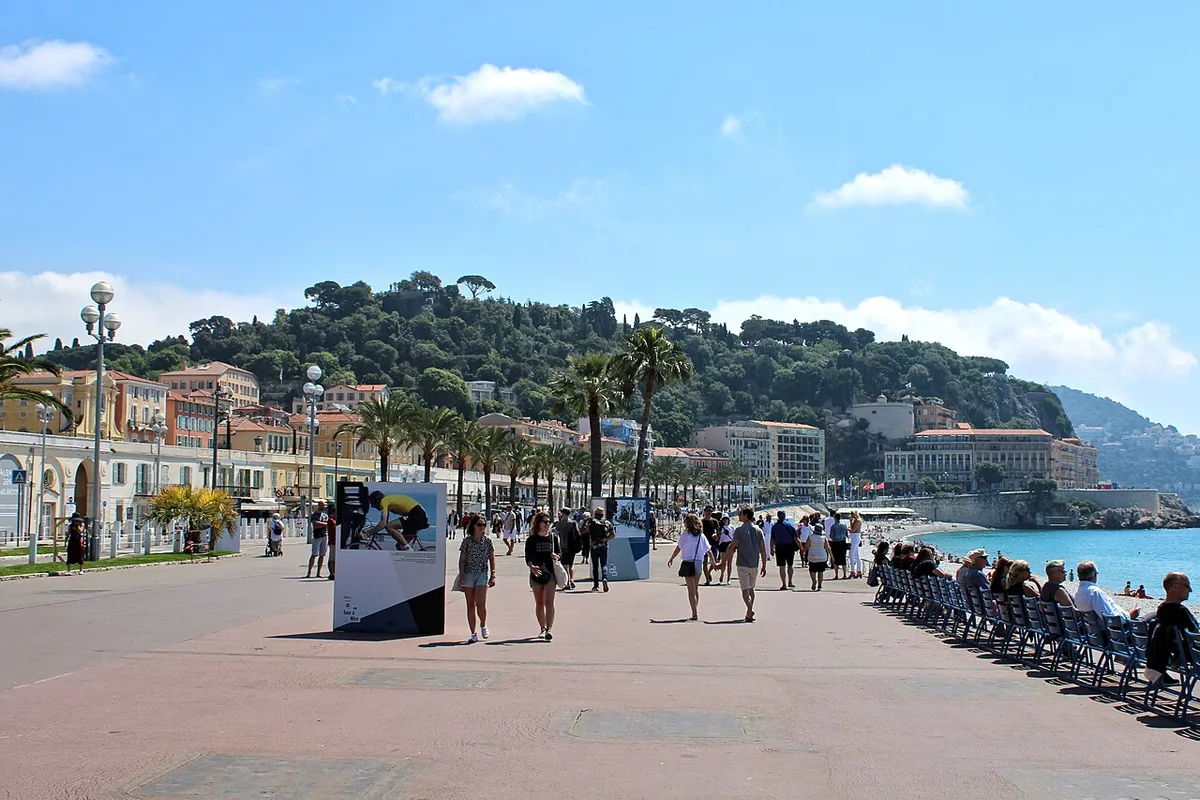
Nice
City guide · Provence-Alpes-Cote d'Azur · France
Promenade des Anglais · Nice Cathedral
About Nice
Nice is the prefecture of the Alpes-Maritimes department on the French Riviera, the southeastern coast of France at the foot of the French Alps. It is the second-largest French city on the Mediterranean coast and the second-largest city in the Provence-Alpes-Cote d'Azur region after Marseille. The city sits approximately 13 km from Monaco and 30 km from the French-Italian border. Its natural environment and mild Mediterranean climate attracted English upper classes in the second half of the 18th century, establishing it as a winter resort town for European aristocracy. UNESCO inscribed Nice as a World Heritage Site in 2021, recognizing its importance as a winter resort town and the resulting mix of cultures. The city is nicknamed 'Nice la Belle' (Nice the Beautiful). The clear air and soft light have long appealed to painters including Marc Chagall, Henri Matisse, Niki de Saint Phalle, and Arman, with their work commemorated in museums such as the Musee Marc Chagall, Musee Matisse, and Musee des Beaux-Arts. Nice has 7 km of beaches along the Azurean coast and an international airport that serves as a gateway to the region.
Who this destination fits
Highlights worth planning around
Strong fit
- UNESCO World Heritage status (inscribed 2021) for importance as a winter resort town with rich cultural mixing
- Second most visited metropolis in Metropolitan France, receiving approximately four million tourists annually
- Second largest hotel capacity in the country
- 7 km of beaches along the Azurean coast
- International airport linking the city to global destinations
- Variety of activities and major cultural and sporting events throughout the year
- Painter heritage commemorated in dedicated museums including Musee Marc Chagall and Musee Matisse
- Proximity to Monaco (13 km) and the French-Italian border (30 km) for regional exploration
- Mild Mediterranean climate suitable for year-round visitation
Tradeoffs
- High visitor volume as the second most visited metropolis in France can lead to crowding
- Popularity may contribute to higher costs, particularly during peak seasons and major events
- Urban density with approximately 4,974 inhabitants per km2 in the city proper
Plan the trip
Best time to visit
Nice's mild Mediterranean climate supports year-round visitation. The tourism calendar features events across seasons: summer events such as 'Soirees estivales' (June-August), the Nice Carnival in February, and autumn programming such as 'L'Automne de l'Image' (September-November). The specific optimal timing depends on traveler preferences for beach weather, event attendance, or avoiding peak crowds.
Planning lead time
Not specified in available evidence; advance booking is advisable given the city's status as the second most visited metropolis in France and its second-largest hotel capacity.
Decision factors
Getting around
Nice Cote d'Azur Airport provides international air connections. The city is approximately 13 km from Monaco and 30 km from the French-Italian border. Local public transport options are not detailed in the available evidence. The city serves as a gateway to regional exploration including coastal areas, mid-country villages, and highland peaks.
Trip Budget Calculator for Nice
Estimate your travel expenses based on duration, style & group size
Global planning baseline. Flights use a generic estimate.
* Commission may be earned from qualifying partner bookings.


