Zagreb
City guide · Central Croatia (Prigorje, Posavina) · Croatia
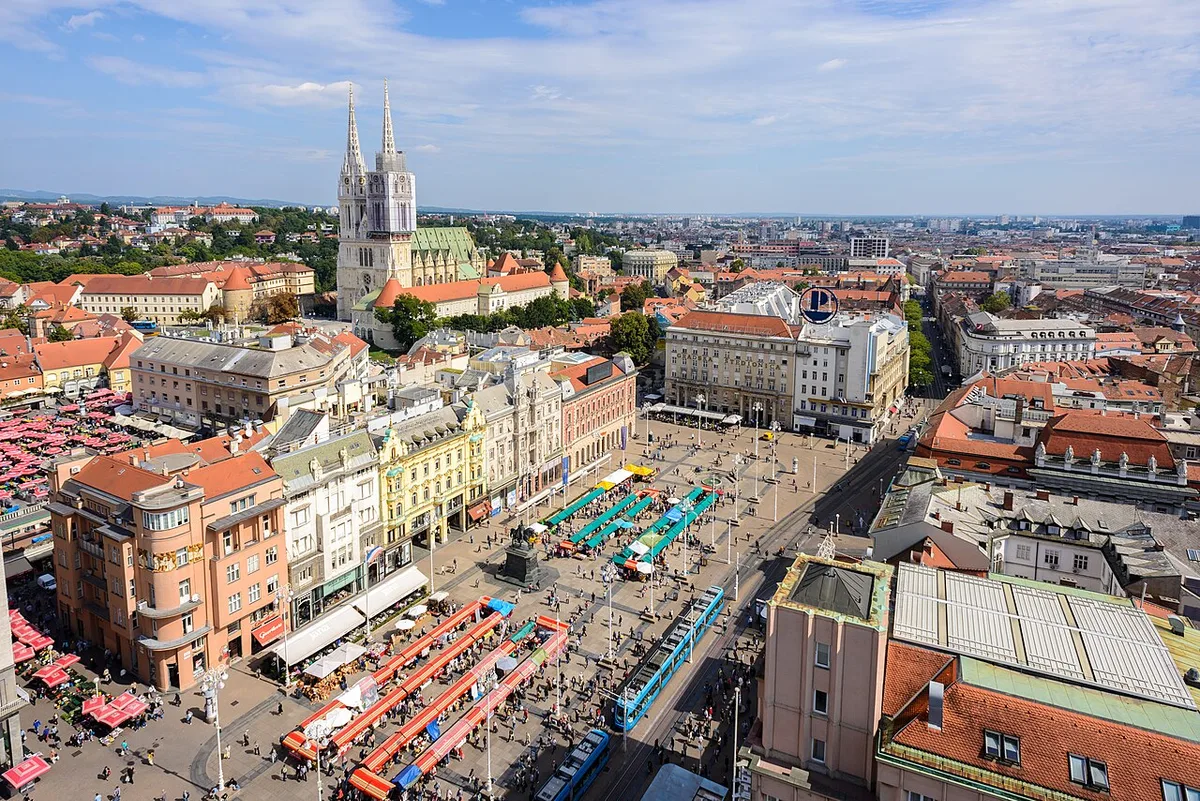
Ban Jelačić Square with Zagreb Cathedral · Mimara Museum
About Zagreb
Zagreb is the capital and largest city of Croatia, situated in the north of the country along the Sava River at the southern slopes of the Medvednica mountain. It is an underestimated capital that blends Austro-Hungarian architecture, a lively café culture, and a compact historic core. The city is administratively a consolidated city-county, subdivided into 17 districts, with most lying at low elevation along the Sava valley while northern districts spread across the Medvednica foothills. Zagreb's transport connections, concentration of industry, and scientific and research institutions underpin its leading economic position in Croatia, and it serves as the seat of the central government and almost all government ministries.
Who this destination fits
Highlights worth planning around
Strong fit
- Compact and walkable historic core with Upper Town (Gornji Grad) landmarks like St. Mark's Church and the Stone Gate
- Rich cultural scene including the Mimara Museum, Croatian National Theatre, and Art Pavilion
- Distinctive local character with Dolac Market and the Zagreb funicular connecting the Lower and Upper towns
- Strong transport connections and concentration of industry and scientific institutions supporting its economic role
- Less overtouristed than coastal Croatian destinations, offering a more local atmosphere
Tradeoffs
- Often overshadowed by Croatia's coastal cities, so it may lack the same 'wow' factor for some travelers
- Continental climate means winters can be cold, which may not suit beach-oriented visitors
- As a capital and administrative hub, it can feel more business-oriented than leisure-focused
- Some key attractions are spread across the city's 17 districts, requiring planning to see everything
- Limited nightlife compared to larger European capitals, though the café culture is strong
Plan the trip
Best time to visit
Spring (April–June) and early autumn (September–October) offer mild temperatures ideal for exploring the compact historic core; summer can be warm but less crowded than the coast, while winter brings a festive atmosphere with cold temperatures.
Planning lead time
2–3 days is sufficient to cover the main sights, including the Upper Town, Dolac Market, and key museums; a longer stay allows for day trips to Medvednica or Plitvice Lakes.
Decision factors
Safety
Zagreb is generally considered a safe capital city for travelers, with standard urban precautions advised; no specific current safety alerts were identified in the available evidence.
Getting around
Zagreb has strong transport connections as Croatia's capital, with a tram network serving the city and its districts; the Zagreb funicular connects the Lower and Upper towns. The city spans about 30 km east–west and 20 km north–south, so planning routes across districts is advisable.
Trip Budget Calculator for Zagreb
Estimate your travel expenses based on duration, style & group size
Global planning baseline. Flights use a generic estimate.
* Commission may be earned from qualifying partner bookings.