Osijek
City guide · Slavonia · Croatia
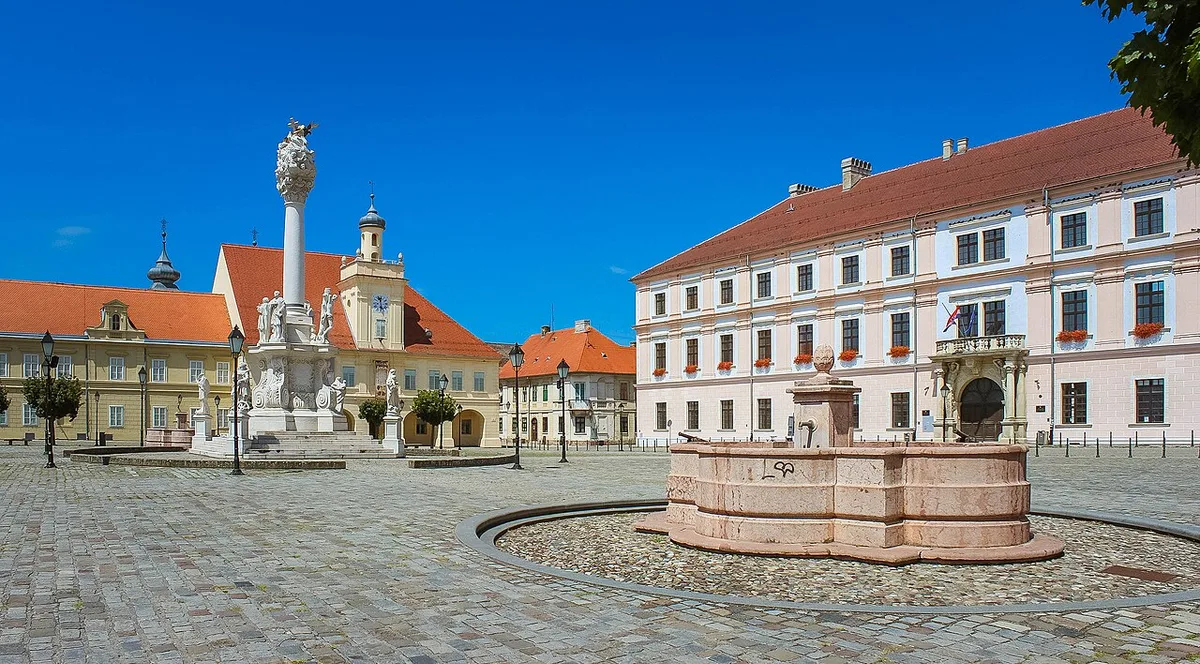
Tvrđa fortress with Holy Trinity Square, Military Command building, Main Guard building, and Museum of Slavonia · Osijek Co-cathedral of St. Peter and Paul
About Osijek
Osijek is the largest city and the economic and cultural hub of the eastern Croatian region of Slavonia, as well as the administrative seat of Osijek-Baranja County. It is the fourth-largest city in Croatia, with a population of 96,313 recorded in the 2021 census. The city is situated on the southern bank of the Drava River, 25 km (16 mi) upstream from its confluence with the Danube, at an elevation of 94 m (308 ft), and is located 16 km (10 mi) west of the Croatia-Serbia border. Its name originates from the Croatian word 'oseka,' meaning 'ebb tide,' reflecting its location on elevated ground that afforded protection from floods. Osijek is known by nicknames including 'Grad na Dravi' (City on Drava) and 'Nepokoreni grad' (Unconquered City).
Who this destination fits
Highlights worth planning around
Strong fit
- Largest city and cultural hub of Slavonia, offering a distinct inland Croatian experience
- Historic Tvrđa fortress, built between 1712 and 1715, with central Holy Trinity Square framed by the Military Command building, Main Guard building, and Magistrate building (now the Museum of Slavonia)
- Rich layered history from Roman Mursa through Ottoman rule and Habsburg reconstruction
- Situated on the Drava River with a pedestrian bridge, adding scenic urban character
Tradeoffs
- Located inland, far from Croatia's Adriatic coast and beach tourism
- Smaller and less internationally known than Zagreb, Split, or Dubrovnik, with fewer mainstream tourist amenities
- Continental climate (Cfb) means colder winters compared to coastal destinations
Trip Budget Calculator for Osijek
Estimate your travel expenses based on duration, style & group size
Global planning baseline. Flights use a generic estimate.
* Commission may be earned from qualifying partner bookings.