Medellín
City guide · Aburrá Valley, Antioquia Department · Colombia
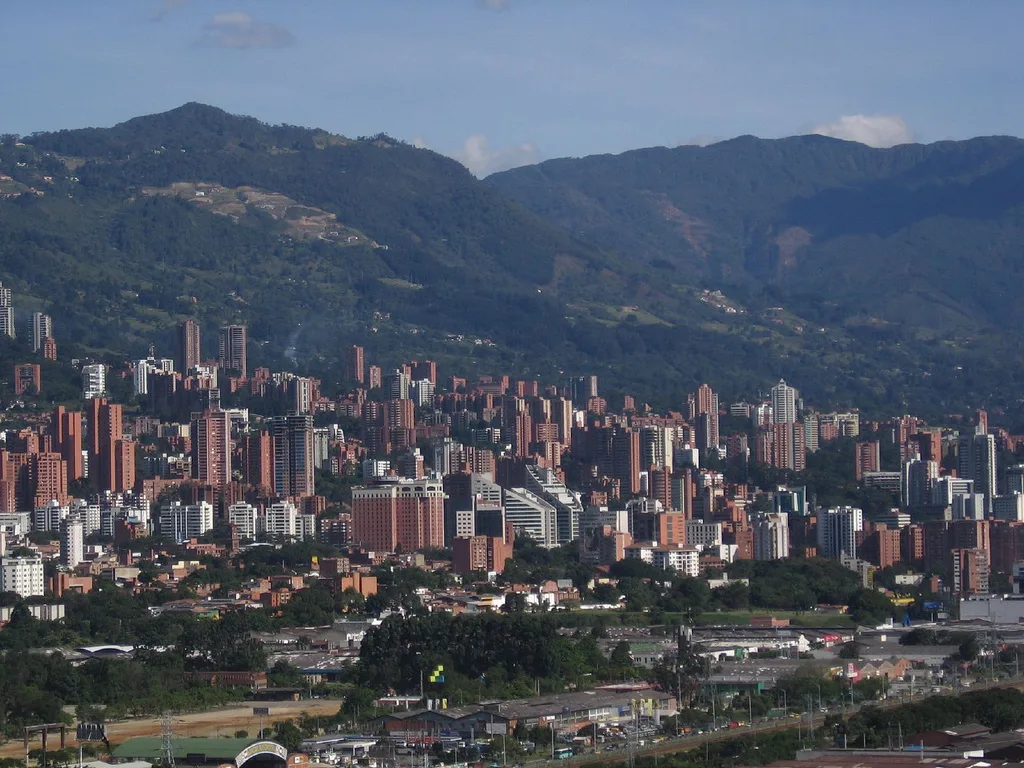
El Poblado District, a notable area of the city · EPM Library, a cultural landmark
About Medellín
Medellín is the second-largest city in Colombia and the capital of the department of Antioquia, located in the Aburrá Valley, a central region of the Andes Mountains in northwestern South America. Known as the 'City of the Eternal Spring' for its mild climate, the city has a population of 2,427,129 (2018 census) and a metro area of over 4 million people. Medellín is a dynamic commercial and industrial center, historically exporting gold and coffee, and is promoted internationally as a tourist destination. The city is recognized for its universities, academies, commerce, industry, science, health services, flower-growing, and festivals. In February 2013, the Urban Land Institute chose Medellín as the most innovative city in the world due to its advances in politics, education, and social development. The city's rapid transit system includes the Medellín Metro and SITVA, and it is served by José María Córdova International Airport.
Who this destination fits
Highlights worth planning around
Strong fit
- Recognized as a global city type 'Gamma +' by the Globalization and World Cities Research Network, indicating international significance
- Metro area produces 67% of Antioquia's GDP and 11% of Colombia's economy, offering economic vitality
- Won the Lee Kuan Yew World City Prize in 2016 for innovation in urban solutions and sustainable urban development
- Hosted UN-Habitat's 7th World Urban Forum in 2014, showcasing its role in global urban discourse
- Nicknamed 'City of the Eternal Spring' and 'City of the Flowers', reflecting a pleasant climate and cultural identity
Tradeoffs
- Located at 1,495 meters elevation in a mountain valley, which may require acclimatization for some visitors
- As a major urban center, travelers should exercise standard caution regarding personal safety in unfamiliar areas
- The city's rapid transit system, while extensive, may be crowded during peak commuting hours
- context includes periods of violence, though the city has since been recognized for innovation and development
- Tropical rainforest climate classification is debated, with some sources noting the mountain setting may not fit this category
Decision factors
Safety
Medellín has been recognized for improvements in security and education since the late 20th century, and was chosen as the most innovative city in the world in 2013 for advances in politics, education, and social development. However, as with any major urban destination, travelers should exercise standard caution.
Getting around
Medellín has a rapid transit system including the Medellín Metro and SITVA, and is served by José María Córdova International Airport. The metro area covers 1,152 km² with a density of 6,925/km².
Trip Budget Calculator for Medellín
Estimate your travel expenses based on duration, style & group size
Global planning baseline. Flights use a generic estimate.
* Commission may be earned from qualifying partner bookings.