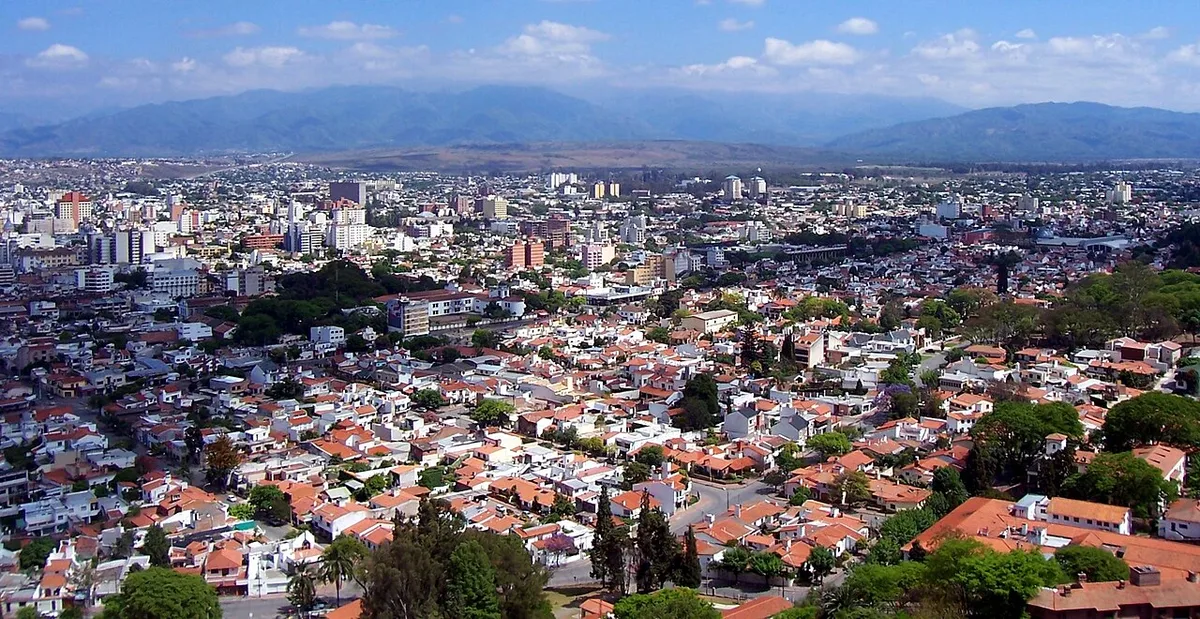
Salta
City guide · Salta Province, Argentina · Argentina
Salta Cathedral · Basilica of San Francisco
About Salta
Salta is the capital and largest city of Salta Province in northwestern Argentina, founded on April 16, 1582 by Spanish conquistador Hernando de Lerma as an outpost between Lima, Peru and Buenos Aires. The city sits at an elevation of 1,152 meters (3,780 ft) in the subtropical highlands, giving it a Cwb climate characterized by pleasant weather year-round with four distinct seasons. Salta serves as the cultural and economic center of the Valle de Lerma Metropolitan Area, which is home to over 50.9% of the province's population. With a population of 627,704 according to the 2022 census, it ranks as the 7th most-populous city in Argentina. The city is known for its colonial architecture, including landmarks such as the Salta Cathedral, the Basilica of San Francisco, the Salta Cabildo, and the Museum of High Altitude Archaeology. Salta's distinct identity comes from its blend of indigenous and colonial heritage, its position as a gateway to the Andes, and its role in Argentina's independence history, particularly through the leadership of General Martín Miguel de Güemes between 1816 and 1821.
Who this destination fits
Highlights worth planning around
Strong fit
- Pleasant subtropical highland climate year-round with four distinct seasons, warm summers and mild winters
- Rich colonial heritage with well-preserved landmarks including the Salta Cathedral, Basilica of San Francisco, and Salta Cabildo
- Strategic location as a gateway to the Andes and the cultural center of the Valle de Lerma Metropolitan Area
- Distinct multicultural flavor shaped by Italian, Spanish, British, and Arab immigrants, particularly Syrians and Lebanese
- significance in Argentina's independence, defended by General Martín Miguel de Güemes
Tradeoffs
- Summer thunderstorms occur almost daily between December and March, with over 80% of the 700mm annual rainfall falling in this period
- Winter nights can be cool with frost quite common, and temperatures occasionally dropping to -7°C (19.4°F)
- The city emerged from the War of Independence financially bankrupt, a condition that lingered through much of the 19th century
Plan the trip
Best time to visit
Spring (September-November) offers sunny weather with warm days between 25-28°C and mild nights between 10-14°C, while fall (March-May) brings dry weather with pleasant days around 22°C and mild nights around 10°C (TIMELESS, source: https://en.wikipedia.org/wiki/Salta, EDITORIAL_CONTEXT)
Trip Budget Calculator for Salta
Estimate your travel expenses based on duration, style & group size
Global planning baseline. Flights use a generic estimate.
* Commission may be earned from qualifying partner bookings.